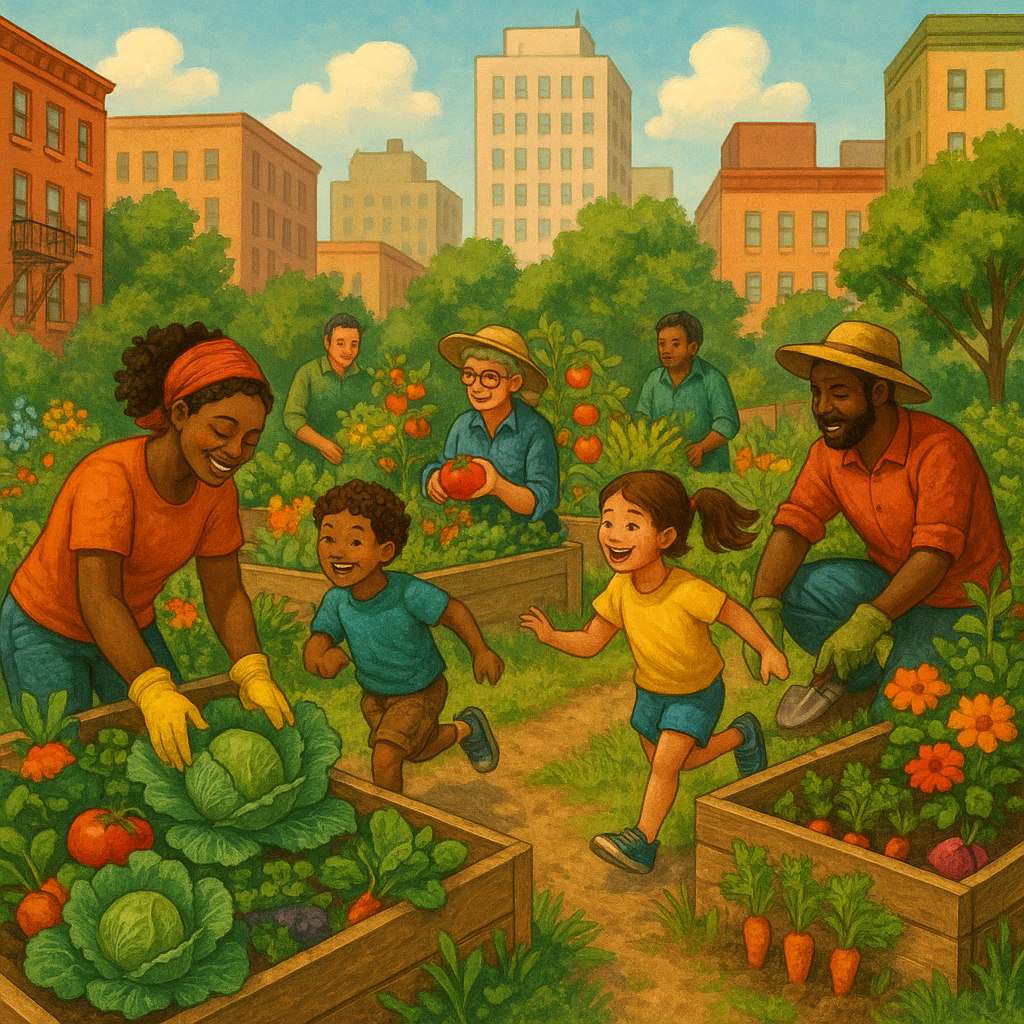
Discover how a simple patch of shared soil can breathe new life into concrete landscapes, creating vibrant hubs where neighbors connect, fresh food grows, and urban communities thrive together.
From Concrete Jungles to Green Oases
There's something magical about stumbling upon a burst of green in the middle of a city block. I remember the first time I visited Rooftop Gardens—a community garden perched above the urban sprawl, where tomato plants reached toward the sky and the air smelled of fresh basil instead of exhaust fumes. It was like discovering a secret world that had been hiding in plain sight all along.
Community gardens like Rooftop Gardens are transforming how we think about urban spaces. What was once an underutilized rooftop or vacant lot becomes a thriving ecosystem where vegetables grow, bees buzz between flowers, and neighbors who've lived next door for years finally meet face-to-face. These green spaces aren't just about plants—they're about reclaiming our cities for life, connection, and possibility.
The transformation happens gradually but profoundly. Where there was once only concrete and steel, suddenly there are raised beds bursting with herbs, vertical gardens climbing walls, and pollinator-friendly flowers attracting butterflies. It's a reminder that nature doesn't need much invitation to flourish—just a little soil, some water, and people who care enough to nurture it.
The Ripple Effect of Growing Together
What strikes me most about places like Rooftop Gardens isn't just the vegetables—it's the conversations happening between the rows of lettuce. There's something about digging in the dirt together that breaks down barriers faster than any organized icebreaker ever could. You show up as strangers and leave as co-conspirators in the grand experiment of coaxing life from soil.
The workshops at Rooftop Gardens create another layer of connection. One Saturday you might learn about beekeeping from a retired teacher who's been tending hives for decades. The next week, a young chef demonstrates how to turn those fresh herbs into pesto that'll make you rethink everything you thought you knew about basil. These aren't just skills being shared—they're stories, experiences, and a kind of wisdom that only comes from getting your hands dirty.
The ripple effects extend far beyond the garden gates. When people feel connected to their neighbors and invested in a shared space, everything shifts. Crime rates drop. Mental health improves. Kids who thought food came exclusively from supermarkets suddenly understand that carrots grow in the ground. It's not magic—it's just what happens when we create spaces for people to come together around something meaningful.
Fresh Food, Healthier Communities
Let's talk about the food. In many urban neighborhoods, finding fresh, affordable produce is a genuine challenge. Food deserts are real, and they have real consequences for health and wellbeing. Community gardens like Rooftop Gardens offer a beautifully simple solution: grow it yourself, right where you live.
The herbs flourishing at Rooftop Gardens—rosemary, thyme, cilantro, mint—aren't just culinary luxuries. They're medicine, flavor, and connection to food traditions that might otherwise be lost in the shuffle of city living. When you can step outside and snip fresh oregano for dinner, you're not just saving money. You're eating something you grew with your own hands, something you know hasn't been sprayed with questionable chemicals or shipped across continents.
There's also something profound about watching kids discover where food actually comes from. At Rooftop Gardens, children attend workshops where they plant seeds, tend seedlings, and eventually harvest vegetables they helped grow. The kid who swore they hated vegetables suddenly becomes an enthusiastic advocate for the cherry tomatoes they picked themselves. That's not just cute—it's the foundation for lifelong healthy eating habits and a different relationship with food entirely.
Building Bridges One Garden Bed at a Time
Community gardens are radical acts of bridge-building in an age when we're more divided than ever. At Rooftop Gardens, you'll find people from every background, age group, and walk of life working side by side. The accountant shares a plot with the artist. The recent immigrant teaches traditional growing techniques to someone whose family has been in the neighborhood for generations. Political differences become irrelevant when you're both trying to figure out why the squash isn't thriving.
These gardens create what urban planners call 'third places'—spaces that aren't home and aren't work, where informal community life unfolds. They're increasingly rare in modern cities, where we tend to move from private space to private space without much interaction in between. Rooftop Gardens offers something different: a reason to show up, stay awhile, and actually talk to the people who share your ZIP code.
The bee hives at Rooftop Gardens offer their own lesson in interconnection. The bees don't care about property lines or neighborhood boundaries—they pollinate flowers across the entire area, improving yields in window boxes and balcony gardens blocks away. It's a perfect metaphor for how community gardens work: the benefits spread far beyond the people who actively tend the plots, enriching the entire neighborhood in ways both visible and invisible.
Starting Your Own Community Garden Journey
If you're feeling inspired to start or join a community garden, the good news is that it's more accessible than you might think. Start by looking around your neighborhood with fresh eyes. Is there a vacant lot gathering trash? An underutilized rooftop? A patch of grass that no one really uses? Any of these could become your neighborhood's version of Rooftop Gardens.
The practical steps are pretty straightforward: gather interested neighbors, secure permission for the space, test the soil, and start planning. But here's what I've learned from watching successful community gardens—the technical stuff is actually the easy part. The real work is building consensus, navigating different visions, and creating inclusive spaces where everyone feels welcome. Start with conversations. Host a casual meeting. Feel out who's interested and what people hope to gain from a shared garden space.
If starting from scratch feels overwhelming, joining an existing garden like Rooftop Gardens is a perfect entry point. Most community gardens welcome new members, and many offer beginner workshops that teach basic gardening skills alongside the social norms and expectations of the space. You don't need a green thumb or years of experience—just curiosity and a willingness to learn. Show up, introduce yourself, and ask how you can help. The rest will unfold naturally.
Whether you're planting your first seedling or tending your hundredth hive, remember that community gardens are about so much more than the harvest. They're about reclaiming our cities as spaces for life, connection, and shared purpose. They're about remembering that we're not just individuals living adjacent to each other, but neighbors with something valuable to create together. In a world that often feels fragmented and isolating, that might be the most important thing we can grow.